

Offshore Wind and Climate Change: How the Industry Can Lead the Path to Carbon Neutrality
Offshore Wind’s Decisive Role in the Climate Race
As climate goals accelerate, offshore wind farms are at the center of decarbonization strategies. With a lifecycle carbon footprint around 4% that of coal, offshore wind represents one of the cleanest scalable energy sources. But the sector’s impact goes beyond emissions—it must now adapt to the very climate it’s helping to stabilize.
For developers, this means planning offshore wind farms in the context of long-term climatic shifts, including changing wind patterns and extreme weather scenarios. It’s not just about finding wind—it’s about finding it resiliently.
Climate Change Is Reshaping Wind Resource Assessment
Since 2010, average global wind speeds have risen modestly—from 7.0 to 7.4 mph. But global averages hide what matters most: regional wind variability. For instance:
- Tropical latitudes may experience increasing wind speeds.
- Northern mid-latitudes—home to many large offshore wind farm projects—could see a decline.
This uneven distribution demands more than historical averages. Developers must now rely on scenario comparison for wind farms, tailored to region-specific climate projections. Wind resource assessment must evolve to address 40+ year operational windows.
Designing Resilience: Engineering for an Unstable Climate
More frequent storms, rising sea levels, and intensifying oceanic conditions pose structural risks to offshore turbines. While higher winds might increase yield, they also amplify mechanical stress, influencing LCOE calculation and long-term O&M planning.
Today’s leaders are applying Global and Regional Climate Models (GCMs and RCMs) to anticipate:
- Component wear and replacement cycles
- Foundation stress and motion
- Climate-adjusted yield projections and insurance considerations
Accurate financial modeling wind energy now depends on integrating these variables from the outset.

Youwind: Climate-Aware, Digital by Design
At Youwind, we integrate climate foresight into the planning phase through partnerships with research leaders like Climate Scale. Our integrated platform supports offshore developers with tools that respond to tomorrow’s conditions—not just today’s.
Key capabilities include:
- Bankable yield assessment using both historical and projected wind data
- GIS constraint analysis combined with climate-adjusted wake loss modeling
- Collaborative workflow for wind developers, aligning technical and business planning under one roof
- Regional climate-aware wind farm layout optimization
These tools are embedded in our early-stage screening environment, designed to help you act with foresight and confidence.
Support Beyond the Software
Technology matters—but guidance does too. Our expert team supports:
- Onshore and offshore wind farm developers
- Emerging market stakeholders without proprietary data
- Flexible project structures, from annual subscriptions to phased, project-based plans
With Youwind, data-driven decisions in wind energy are not a promise—they’re a process, supported by real humans who understand your project’s risks and realities.

Future-Proofing Your Projects
Offshore wind must now go beyond layout and permitting. The future belongs to projects that are designed for climate variability, engineered for resilience, and backed by financial modeling that reflects long-term operational risks.
Youwind empowers developers with the tools and insights to navigate this new landscape—building wind farms that endure, adapt, and deliver under a changing sky.
Request a demo
Get a first-hand look at how Youwind can support your wind energy management and development, whether onshore or offshore. Fill out the form and we’ll be in touch to schedule your personalised demo.
Related Knowledge
 March 5, 2026
Youwind Newsletter March 26 Edition
Welcome to the March edition of the Youwind newsletter Each month, we’ll bring you the latest key developments in wind project design, product updates from our platform, company news, and a look at what our team has been working on. You’ll also find upcoming webinars,…
 February 24, 2026
Youwind leads the shift to hybrid wind power plant design with storage
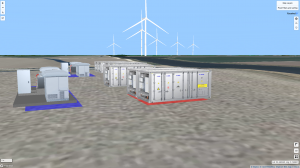
The first SaaS platform integrating BESS and H₂ into wind farm design from early-stage project development is a reality The energy transition is accelerating, and with it the complexity of renewable power plants. Wind farms are, especially for onshore, no longer developed as standalone generation assets — they are increasingly…
 February 17, 2026
Optimizing Onshore Wind Project Development Through Data and Design
Onshore wind project development and design has always been an evolving discipline, moving slowly fromintuitionto engineering: a blend of meteorology, geography, and experience. Every decision is an exercise in managing uncertainty — from predicting wind patterns and analyzing topography to assessing investment risks. Each site brings its own set of challenges, and each design iteration…