

Wind Farm Electrical System Design: Turning Electrical Complexity into Smarter Project Decisions
In every wind project, power generation is only half the story. The other half is getting that power from each turbine to the grid efficiently, reliably, and at the right cost. That is where the wind farm electrical system design becomes a decisive part of project development. While turbines often get the spotlight, the electrical system quietly shapes feasibility, CAPEX, layout logic, and long-term performance from the earliest planning stages.
The Hidden Complexity Behind Connecting Turbines to the Grid
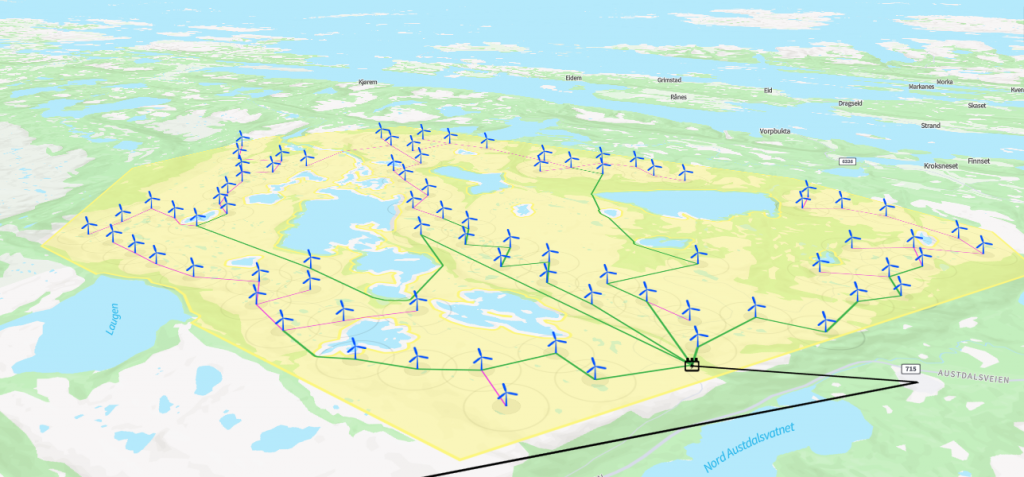
One of the biggest pain points for developers is that electrical transmission design is rarely simple. A wind farm must connect turbines, substations, transformer stations, array cables, export cables, and the onshore grid connection in a way that works both technically and economically. Even small changes in turbine layout, site constraints, exclusion zones, or cable routing can have a major impact on total cable length, infrastructure costs, and project validity. Without a clear way to model these connections early, teams can end up working with incomplete assumptions, inefficient layouts, or costly redesigns later on.
Simplifying Wind Farm Electrical System Design with Youwind
This is exactly why the wind farm electrical system design matters inside Youwind. The platform gives users a practical way to define and evaluate the full electrical transmission system without forcing them into unnecessary engineering detail too early. Teams can select key components from the library, place them manually on the map, upload them from files, or use automated tools to generate substations and cable routes. Array cables can be assigned according to cumulative power needs, export cables can be routed toward the grid connection while considering constraints and exclusion areas, and substations can be positioned automatically to reduce cable distances and improve project economics. The result is a connected electrical layout that is easier to review, validate, and include in the financial analysis of the scenario.
From Technical Layout to Strategic Advantage in Wind Farm Development
At a strategic level, the electrical system design feature is not just about cables and substations. It is about making better decisions earlier. When developers can understand how electrical infrastructure affects cost, constructability, and layout validity from the start, they gain a much stronger basis for comparing scenarios and reducing uncertainty. This leads to faster screening, better alignment between engineering and finance, and more robust investment cases. In a market where wind projects are increasing in scale and complexity, electrical system intelligence is no longer a secondary detail. It is a competitive advantage that helps transform technical planning into strategic clarity.
Request a demo
Get a first-hand look at how Youwind can support your wind energy management and development, whether onshore or offshore. Fill out the form and we’ll be in touch to schedule your personalised demo.
Related Knowledge
 December 11, 2025
Designing Offshore & Onshore Foundations: Building the Backbone of Every Wind Farm
Early-stage offshore wind project development often prioritizes wind resource and layout optimization, while foundation feasibility is deferred to later design stages. Whether positioned far offshore or on land, foundations ensure turbines remain stable, safe, and accessible throughout decades of operation. As projects grow in size,…
 November 26, 2025
Designing Smarter Wind Farms: Why Exclusion Zones Matter
Wind farms design is becoming increasingly data-driven, but one challenge remains stubbornly constant: reality. Every potential project area , whether stretching across rural landscapes or spanning offshore waters, comes with a maze of constraints. Environmental protections, buildings, roads, grid infrastructure, terrain limitations, and regulatory buffers…
 November 18, 2025
A Fast and Complete Site Suitability Evaluation for your Wind Park
Before any design work begins, every wind park requires a thorough understanding of its environmental and operational constraints. Fast, reliable site suitability assessments help developers anticipate risks, validate turbine choices, and ensure that early decisions are backed by accurate data rather than assumptions. With the…