

Designing Offshore & Onshore Foundations: Building the Backbone of Every Wind Farm
Early-stage offshore wind project development often prioritizes wind resource and layout optimization, while foundation feasibility is deferred to later design stages. Whether positioned far offshore or on land, foundations ensure turbines remain stable, safe, and accessible throughout decades of operation. As projects grow in size, the ability to correctly assess and model these foundations early in development is key to better estimate CAPEX and LCOE.
Wind Farm Challenges: Complex Loads, Costly Uncertainty
Developers face a key challenge: foundation design is highly site-specific. Water depth, soil conditions, turbine size, metocean data, and even mooring approaches can dramatically change the structural requirements and the cost. Traditionally, foundation modelling is dependent on fragmented data and often left too late in the planning cycle. This leads to underestimated budgets, and inaccurate project comparisons.
For offshore projects, the problem is amplified. Fixed-bottom and floating foundations behave differently, rely on different design drivers, and have a significant weight on CAPEX. Onshore, variable soil conditions and turbine scaling introduce similar uncertainty. Without an efficient way to estimate realistic weights and costs early, projects risk moving forward on assumptions that may not hold.
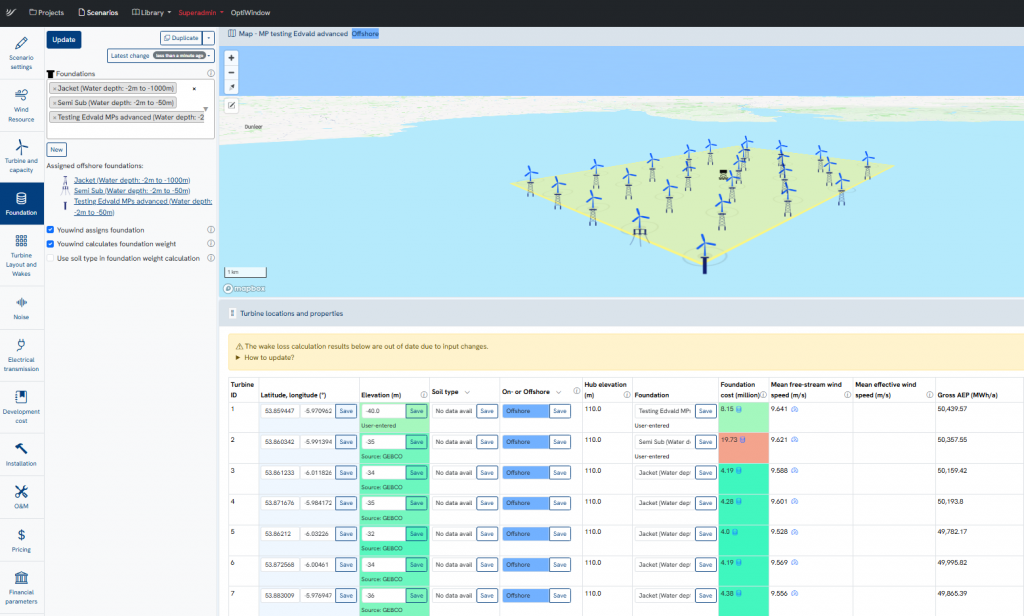
Streamlined Foundation Modelling Inside Youwind
Youwind introduces a structured way to define, compare, and model foundations for any wind farm scenario, offshore or onshore, without requiring deep engineering detail at the earliest stages.
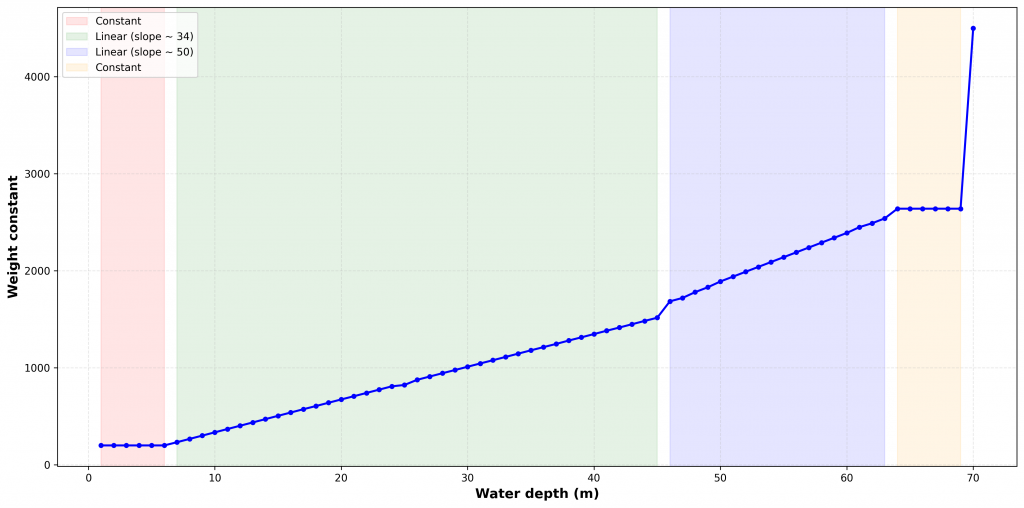
Users start by selecting a foundation category from the library: either bottom-fixed (monopile, jacket, gravity-based), floating (spar, semi-submersible, tension-leg) or onshore foundations (gravity-based). The platform then applies tailored modelling strategies for each category. For monopiles, for example, Youwind offers both preliminary empirical estimations and a more advanced sizing method based on structural ratios and soil interaction. For jackets, an empirically scaled model accounts for turbine size and location-specific conditions. Floating solutions incorporate automatic calculations of mooring line lengths and footprint radii. Throughout all categories, secondary steel structures and installation costs are automatically incorporated.
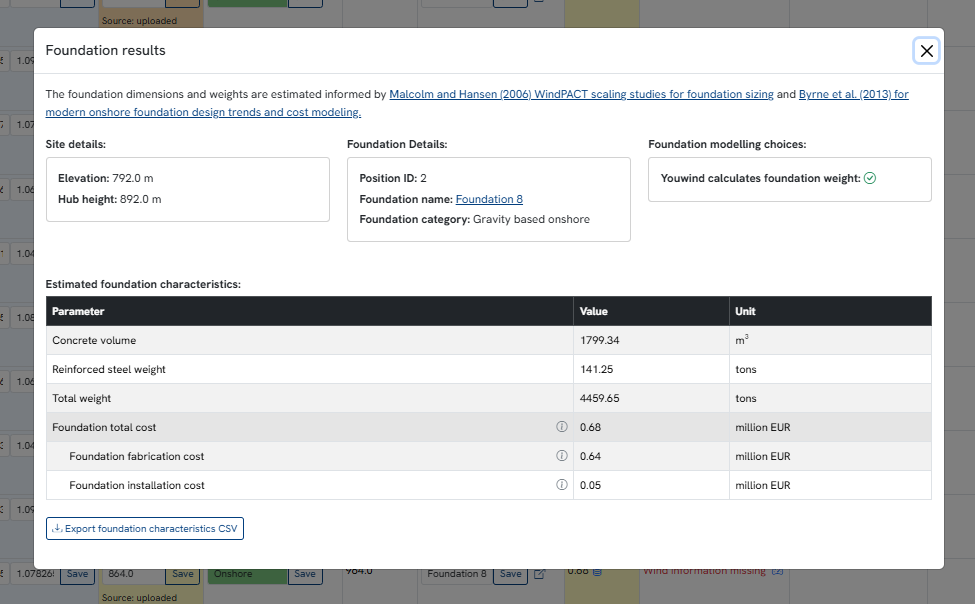
Onshore gravity foundations benefit from scaling relationships derived from industry research, enabling quick estimation of concrete and reinforced steel requirements. As for offshore foundations, installation costs can also be accounted.
Crucially, Youwind allows developers to use manual inputs, automated calculations, or a hybrid approach, ensuring flexibility while maintaining consistency across scenarios.
Why It Matters: Smarter Strategies, Lower Risk, Stronger Wind Farms
Accurate, early-stage foundation modelling isn’t just a technical advantage; it’s a strategic one. By integrating foundation technology, site suitability and cost into layouts from day one, developers can:
- Make more confident comparisons across turbine types, sites, and technologies.
- Account for site suitability by ensuring that foundations meet both seabed conditions and water depth requirements.
- Reduce design uncertainty for both fixed-bottom and floating wind farm options.
- Improve CAPEX forecasts and strengthen investment cases.
- Accelerate project screening and eliminate unfeasible concepts early.
- Build a more transparent workflow where engineering, GIS, and finance rely on the same validated inputs.
As the industry pushes toward deeper waters, larger turbines, and more complex environments, foundation intelligence becomes a core differentiator. With Youwind’s modelling tools, teams gain a clearer and data-driven understanding of what it truly takes to support a modern wind turbine. Through advanced simulations, transparent workflows, and high-resolution datasets, Youwind enables developers to evaluate geotechnical risks, bathymetry limitations, compare foundation concepts, and anticipate long-term performance impacts earlier in the process. This empowers project teams to make more confident decisions, streamline design iterations, and ensure that every foundation strategy aligns with technical, environmental, and financial objectives.
Request a demo
Get a first-hand look at how Youwind can support your wind energy management and development, whether onshore or offshore. Fill out the form and we’ll be in touch to schedule your personalised demo.
Related Knowledge
 November 26, 2025
Designing Smarter Wind Farms: Why Exclusion Zones Matter
Wind farms design is becoming increasingly data-driven, but one challenge remains stubbornly constant: reality. Every potential project area , whether stretching across rural landscapes or spanning offshore waters, comes with a maze of constraints. Environmental protections, buildings, roads, grid infrastructure, terrain limitations, and regulatory buffers…
 November 18, 2025
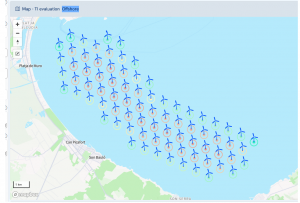
A Fast and Complete Site Suitability Evaluation for your Wind Park
Before any design work begins, every wind park requires a thorough understanding of its environmental and operational constraints. Fast, reliable site suitability assessments help developers anticipate risks, validate turbine choices, and ensure that early decisions are backed by accurate data rather than assumptions. With the…
 November 5, 2025
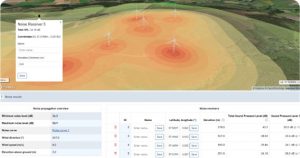
Predicting the Sound of Progress: Noise Propagation Modeling
Youwind Platform Guide As wind energy expands closer to communities, managing acoustic impact is becoming an essential part of responsible project development. Regulators and local residents increasingly demand transparency around noise emissions, while developers must ensure compliance without compromising efficiency. Traditionally, evaluating sound propagation across…