

Choosing the right turbine and electrical system components for best wind farm performance
Wind farm performance depends on much more than wind speed. A strong wind resource is essential, but the way turbines, foundations, cables and electrical systems are selected can have a decisive impact on energy yield, project cost and long-term profitability.
In the early stages of wind farm development, one of the most common assumptions is that larger turbines automatically lead to better projects. In reality, and especially for onshore wind projects, the best-performing configuration is not always the one with the biggest machines or the lowest initial cost. It is the one that fits the site, the grid, the logistics strategy and the financial objectives of the project.
For developers, this makes component selection a strategic decision. Choosing the right combination of technologies requires comparing multiple scenarios quickly, understanding trade-offs clearly and connecting feasible technical choices with economic outcomes from the beginning.
Why bigger is not always better?
The wind industry has moved toward larger turbines, higher hub heights and longer blades. In many cases, this has helped increase electricity production and reduce the Levelized Cost of Energy (LCOE). However, bigger turbines are not always the best option for every site.
A larger turbine may increase electricity production due to an increased swept area, but it can also increase CAPEX, create new transport and installation challenges, require different foundations or introduce greater wake effects depending on the layout. In some cases, a smaller or more balanced turbine model can offer a better overall business case. If we add height constraints lead by close-by airport facilities, to mention a direct relevant constraint, then the choice does not become a straight-forward decision.
The right question is not “Which turbine is the biggest?” but “Which turbine creates the strongest technical and financial result for this specific site?”
This is where wind farm design software becomes critical. Developers need to compare different turbine models, test them in several layouts, calculate for each alternative wake losses, energy yield and cost assumptions side by side before committing to a configuration.
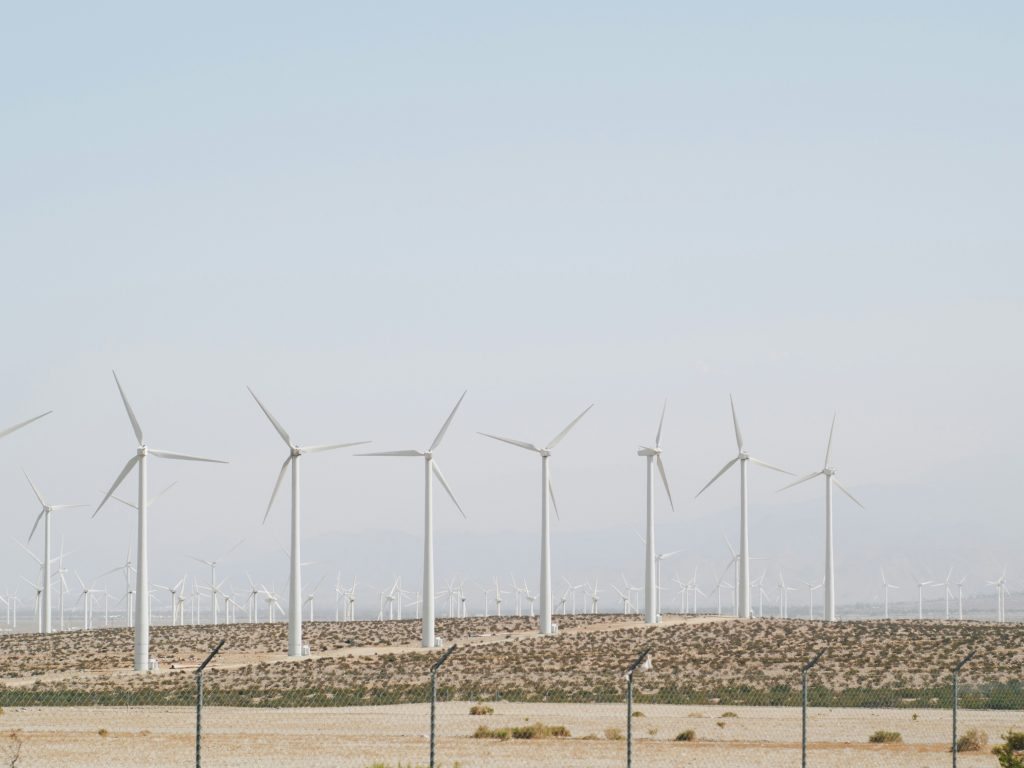
Matching turbine technology to site conditions
Every wind farm site has its own technical profile. Wind resource, turbulence, terrain or seabed conditions, grid access and logistics all influence components selection.
A turbine that works well in one market or environment may not be suitable for another. Sites with high turbulence require turbine integrity suitability to be assessed against site conditions and turbine characteristics. Offshore projects with deeper waters may require different foundation strategies. Remote sites may face transport limitations that affect blade length, tower height or installation planning.
Matching turbine technology to site conditions helps developers reduce uncertainty and avoid decisions that look attractive in early calculations but create problems later in the project lifecycle.
Key factors influencing component selection
Wind resource and turbine power curve
Wind resource assessment is a key input for any wind farm layout design. Turbine selection must be aligned with the wind profile of the site, including average wind speed, wind direction, seasonal patterns and expected variability.
AEP calculation workflows help developers understand how each turbine model performs under site-specific conditions. But yield should not be evaluated in isolation. A configuration that could produce more electricity may also be underused in a specific site and require higher investment, more complex installation or additional electrical infrastructure.
Turbulence and wake effects
Wake loss modeling is an important part of evaluating wind farm performance. Turbine spacing, layout design and ambient turbulence influence in how much energy is lost due to interactions between turbines.
This is especially important in large wind farms, where small layout changes can have a meaningful impact on annual electricity production. Turbine selection must therefore be evaluated together with layout optimization, rather than as a separate decision.
Bathymetry and foundation strategy
For offshore wind project development, bathymetry plays a major role in determining the feasibility and cost of different configurations. Water depth, seabed soil conditions and distance from shore influence foundation type, installation strategy and cable routing.
A turbine model that looks optimal from an energy perspective may require a foundation concept that increases project complexity or cost. Also, the early assessment of turbine-foundation coupling for floating alternatives is a key driver for best configuration choice. This is why connecting layout, bathymetry and foundation assumptions within the same workflow can provide a more integrated view of project options.
Grid conditions and electrical system design
Electrical system design for wind farms influences electric losses, project costs and overall system performance. Cable sizing, cable configuration and routing, substations location, grid connection points, landfall locations in shore, with its losses for each configuration all influence the final business case.
In addition, assess performance loss due to a cable failure can be performed during early phases, balancing extra costs due to adding extra cable routing with minimizing production loss in case of failure.
Poor electrical design can reduce full wind farm efficiency and create operational risks despite not being the most CAPEX-intensive part of the project. Therefore in offshore projects, early electrical design and cable optimization are especially important.
Transportation, logistics and installation
Component selection must also reflect what is feasible and practical to transport and install. Larger turbines require specific vessels, port infrastructure, road access or lifting equipment. These constraints can affect timelines, installation costs and risk exposure.
For onshore projects, transport routes can limit blade length or tower size. For offshore projects, installation windows, vessel availability and foundation strategy can shape the final configuration.
Balancing CAPEX and energy yield
One of the main challenges in component selection is finding the right balance between CAPEX and energy yield.
A higher-cost turbine or electrical configuration may be justified if it improves AEP, reduces losses or contributes to a lower LCOE over the project lifetime. But higher production does not automatically mean higher profitability. Developers need to understand whether the additional yield compensates for the extra investment.
This is why financial analysis in wind farm development should be connected to technical design from the beginning. Turbine models, layouts, cable routes and foundation choices should not be evaluated only as engineering decisions. They should be tested as business-case decisions.
Offshore-specific considerations
Offshore wind projects introduce additional layers of complexity. Component selection must account for:
- Bathymetry, water depth and seabed soil conditions
- Inter-array and export cable routing
- Offshore and onshore substations
- Installation strategy and vessel availability
- Distance to grid connection
- Weather windows and marine logistics
Each of these variables can influence project cost and development or installation schedule. A change in turbine model can affect foundation design. A change in layout can alter cable length. A change in cable routing can impact electrical losses or installation planning.
For offshore teams, the ability to evaluate these dependencies quickly is essential. Decisions made in early-stage design can have long-term consequences for project economics, permitting and execution.
How correct component selection can increase profitability[
Choosing the wrong turbine or electrical configuration can affect a project long after the initial design phase.
A poor match between turbine and site conditions can reduce electricity production while keeping CAPEX in high ranges. Underestimating wake effects can lead to overly optimistic AEP estimates. Inefficient cable routing can increase electrical losses. Overlooking logistics constraints can delay installation or increase project risk.
These issues can affect both technical performance and project economics, leading to potentially increase LCOE.
In competitive markets, developers need to make decisions that are not only technically sound, but also economically robust. This requires a workflow where componenent choice and design, yield, cost and financial impact are evaluated together.
How Youwind supports smarter component selection
Youwind helps developers compare technical configurations and understand their financial impact within a single web-based workflow.
Instead of evaluating turbine choice, layout design, electrical systems and financial assumptions in separate tools, teams can bring these inputs into an integrated workflow and compare scenarios more efficiently.
Turbine library comparison
Developers can compare different turbine models and assess how each option relates to layout, energy yield and financial performance.
Rapid scenario modeling
Multiple technical combinations can be compared across scenarios, helping teams understand which configurations are worth developing further.
Wind farm layout design and optimization
Layouts can be generated and optimized according to site-specific conditions, wake effects and project constraints.
Electrical design and cable optimization
Electrical system assumptions, cable routing and infrastructure choices can be evaluated earlier in the project design process.
Foundation and bathymetry integration
For offshore projects, bathymetry and foundation design can be incorporated into the evaluation of different scenarios.
Financial impact comparison
Technical choices can be connected to CAPEX, energy yield, LCOE and financial outputs, giving developers a clearer view of the business case.
Integrated technical and economic evaluation
By combining engineering and financial analysis, Youwind helps teams compare technical options alongside their financial implications.
Why this matters
Wind farm development is becoming more competitive, more complex and more dependent on early-stage decision-making. Developers need to compare many possible configurations before selecting the technologies that will define project performance for decades.
The right components can improve yield, reduce risk and strengthen profitability. The wrong choices can lead to higher costs, lower production and long-term financial underperformance.
Youwind helps developers make these decisions faster, more efficiently and with greater clarity. By connecting turbine comparison, layout optimization, electrical design, foundation and bathymetry data, LCOE calculations and financial analysis, the platform supports a more integrated approach to wind farm design.
Because the best project is not always the one with the biggest turbine. It is the one where every technical choice supports a stronger, more profitable and more resilient business case.
Request a demo
See how Youwind helps wind energy teams compare turbine models, optimise layouts and electrical systems, and understand how each technical decision affects AEP, LCOE and project profitability. Fill out the form and we’ll be in touch to schedule your personalised demo.
Related Knowledge
 September 30, 2026
Youwind Newsletter October 26 Edition
Welcome to the October edition of the Youwind newsletter Each month, we’ll bring you the latest key developments in wind project design, product updates from our platform, company news, and a look at what our team has been working on. You’ll also find upcoming webinars,…
 August 10, 2026
Youwind Newsletter September 26 Edition
Welcome to the September edition of the Youwind newsletter Each month, we’ll bring you the latest key developments in wind project design, product updates from our platform, company news, and a look at what our team has been working on. You’ll also find upcoming webinars,…
 July 9, 2026
Offshore Wind Auctions in Europe during second half of 2026: How Developers Can Respond Faster to AO9, AO10 and AR8 Opportunities
Offshore wind project development has always involved uncertainty. Developers need to evaluate numerous conditions: wind resource, seabed geophysical and geotecnical states, grid access, environmental constraints, logistics with the right harbour, electrical infrastructure, financial viability… Everything long before a project reaches maturity. Nowadays, the pressure on…